
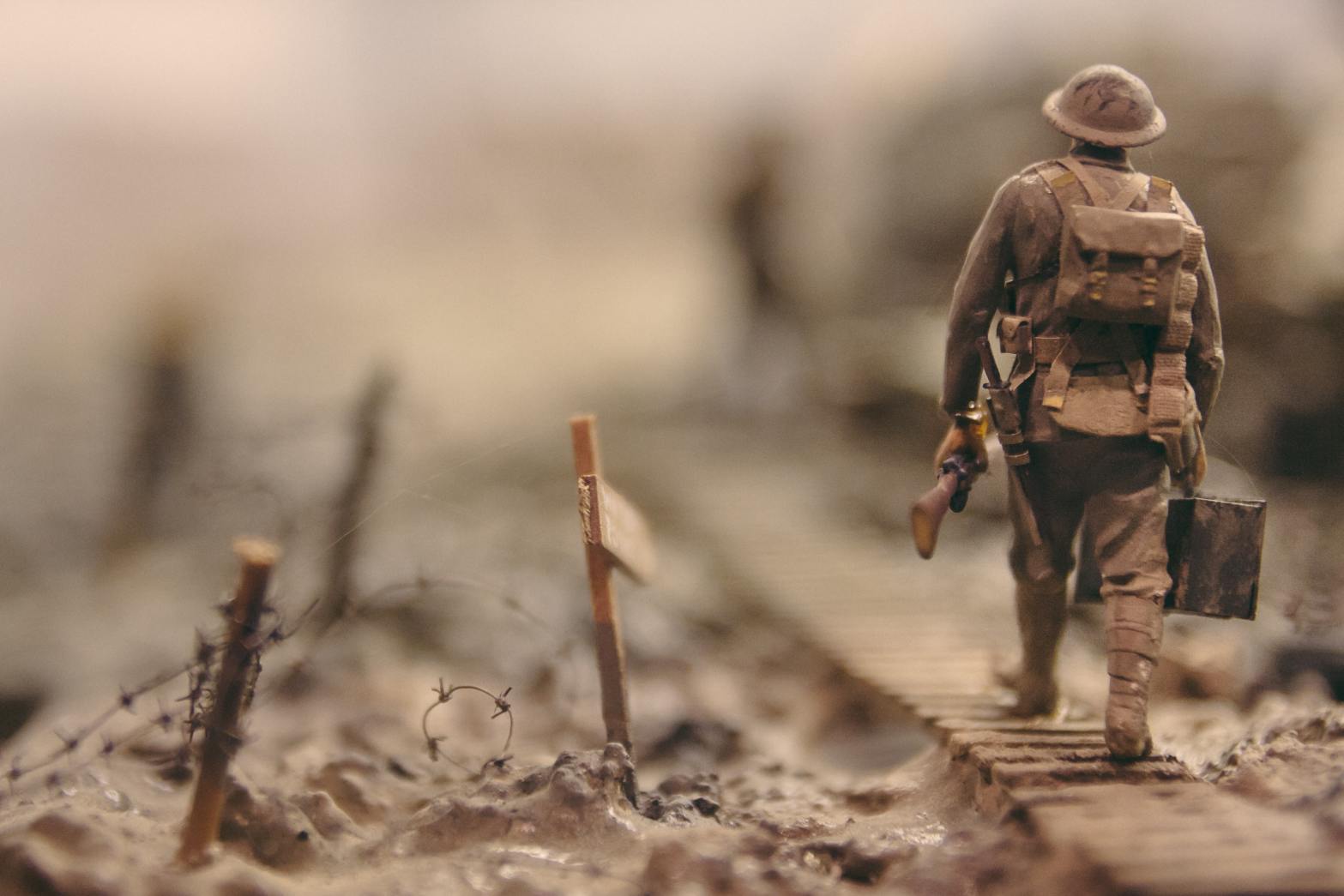
One of the very best movies I have seen in recent years is the World War I epic called 1917. The basic premise of the film is two young soldiers are tasked with delivering orders to another unit to call off a planned offensive attack because they would surely lose as it is a trap. In one of many profound scenes, our main protagonist, Lance Corporal Schofield is told by Captain Smith that he must ensure that there are witnesses when he delivers the standdown orders to the commander (Colonel Mackenzie) of the unit that must not advance, lest they be massacred. Schofield replies, “They’re direct orders, sir,” to which Captain Smith says, “I know, but some men just want the fight.”
What an absolutely chilling statement.
Of course, what he was saying is that, even if Colonel Mackenzie received written orders to not advance, he might do it anyway because, well, he likes fighting, he enjoys war, he gets some sort of joy out of battle. He could simply say he never received the order.
Some men cannot do without the war, it’s like they need it to live, or they derive meaning from the conflict. That sounds strange, I know, but some men just want the fight, even if it does damage to those they claim to love or care about. The fight, to them, is the most important thing in all the world.
This is not a problem just in literal war, either. Churches everywhere seem to be in perpetual conflict, constant battles, ongoing unease and restlessness. Not because they are battling against, say, the rulers, the powers, the world forces of this darkness, the spiritual forces of wickedness in the heavenly places (Eph 6:12, NASB). Or even against sin that wages war within us (Rom 7). But with, well, anything and anyone that will keep them in constant battle.
For some, conflict almost literally gives them life. It’s as if they cannot do without some sort of cause or battle. It’s like air or water. If no conflict is present, they’ll create some. Every conversation must be tinged with a critique, a line of gossip, some sort of misery because, well, we can’t be miserable by ourselves, we need others to join us in our discontentment. You better believe that you’ll know they’re unhappy because being quarrelsome makes them happy. Ironic, isn’t it?
Some churches can’t seem to get out of this rut, and I believe it’s for several reasons. For one, some churches have had disfunction, unhealthiness, broken structures, and fighting consistently for so long, they don’t recognize that it’s destructive and wrong. It’s like when I lived in North Texas where the foundations of homes shifted and created cracks inside and outside the house. They were there so long some homeowners forgot they were there; they just got used to them. Sometimes, churches get used to constant disfunction and don’t even realize it. But then when healthy systems, teachings, structures are introduced, it’s they that are the problem. Which is good for the fighters because they have something new to battle.
A second reason may be the most obvious. The people who genuinely don’t want conflict, they’d prefer the conflict over confronting those who are causing the conflict. By this I mean it’s easier to sit and listen, or engage (in other words, join in and eventually buy-in), than it is to rebuke. It’s uncomfortable to tell someone you know, or someone who you consider a friend, to kindly stop the constant negativity. It is, unfortunately, easier and more comfortable to sit and listen over and over and over as your friend waxes eloquent as to why everything is terrible…again.
To be sure, there are times when conflict is necessary. We should battle sin in our hearts, battle sin with one another (i.e., help our brothers and sisters defeat sin in their lives), put an end to destructive false teaching, fight for what is right and good and biblical. But that’s not what’s at issue here. What’s at issue here is what the bible would call a quarrelsome person (Prov 17:14; 18:1; 20:3; 2 Tim 2:23; James 4:1-2 see also 1 Cor 12:25; Jude 1:19). Someone who must divide, must complain, must critique, must fight, and must bring others into their battles.
The dangers are inherent, aren’t they? Unchecked, this will divide and destroy a church. Negativity and gossip spread through a church and community like gangrene. It will dishearten saints, kill fellowship, stop momentum. After all, how do you focus on the gospel when you’re bogged down fighting each other all the live long day?
Another danger is that the love of fighting, the negativity, they are slowly killing the source. A Christian who lacks joy is a contradiction in terms. Someone who must always be in conflict is really crying out for help because something is not right. Left unchecked, the person will ironically continue to hurt themselves.
A third danger is that it’s hurting you, that is, if you are always giving ear to it. I’ve been a pastor long enough to know that if a supporter has turned on you, I usually want to ask who they’ve been giving ear to. Inevitably, they have listened and listened and listened to the fighter and have slowly bought in. Do we really think we are strong enough to hear constant negativity and not let it affect us?
What should you do when you recognize this?
Simple enough: stop giving ear to it. If we love our friends we will gently, lovingly tell them how destructive constant fighting is. It’s sinful and destructive. Loving rebuke is never fun, but it’s sometimes necessary. If we see constant, unrepentant sin in the lives of our brothers and sisters and say nothing, that’s unloving. We aren’t loving them well, not when we can do something about what’s hurting them and stay silent.
Paul offers this advice in Titus 3: “But avoid foolish controversies and genealogies and strife and disputes about the Law, for they are unprofitable and worthless. Reject a factious man after a first and second warning, knowing that such a man is perverted and is sinning, being self-condemned.”
It’s clearly possible to offer grace while also staying away from factiousness. Warn repeatedly, in love (repentance is not only always available, but preferred/the goal!), then, if no repentance is forth coming and they continue to unlovingly drag you into their battles, mark and avoid. We should fight, but we should fight sin and darkness, not one another, and we surely shouldn’t love the battles. But some men, well, they just want the fight, and they’ll take them wherever they can get them. Don’t let that be you.
 The Bearded Ecclesiologian