

Be Faithful and Come What May

What does church success look like during a global pandemic? For at least a generation, success in churches was based largely on numerics, on this we can agree. Every year in my denomination (the Southern Baptist Convention), for example, churches must fill out the Annual Church Profile (ACP), which asks churches nearly every conceivable question regarding their numbers. It was easy to get sucked into this being a type of self-reflection on whether or not you and your church were “successful” that year. Now, this is not to denigrate ACPs, they serve a purpose, of course, but it has been clear for at least a half century that numbers purportedly told the story about the health and success of a church. 

And what pastor hasn’t attended associational, state, or national convention meetings where they were asked multiple times, “Hey brother, how many you runnin’?” 

Numbers are important, but they do not always tell the full story on church health and success. Big churches can be unhealthy, small churches can be healthy. We know this in every season, but this especially comes to the fore in the midst of a global pandemic. 

If numbers = success/health, a majority of churches right now are likely not getting a passing grade. Churches everywhere are seeing decreases in attendance: once-a-month attenders have become non-attenders, the vulnerable cannot attend because of health concerns, and some regular attenders have abandoned the fellowship, perhaps for a different church that fits their preferences better. This can be quite disheartening until you remember that Scripture does not define success or health according to numbers. Rather, what we are called to is faithfulness, and God will take care of the results. 

This is good news for pastors, churches, and faithful church members. Better still, it applies whether or not we are in a global pandemic. While saying “just be faithful” seems overly simplistic, it really does not have to be as complicated as we might try to make it. Does this resolve all questions we might have right now in terms of having in-person service versus online only or mask versus no mask or any number of questions the Bible is silent on? Of course not. 

What it does do is (1) help us keep our hand to the plow, (2) fend off discouragement, and (3) protect our hearts when criticized. 

Preach the Word, study the Word, pray, love unconditionally, serve sacrificially, rest in the gospel, gather with the saints in the church you have covenanted with (if possible), love your neighbor as self – these are all things we can do at all times, COVID or not. 

Last year I wrote a post at FTC pleading with church members to give their pastor grace. Pastors need grace (just as much as you do, by the way) in and out of global pandemics and my goal there was to speak to church members to be understanding and gracious as their pastor navigated a unique situation with them. Of course, some will not heed this call to grace. Grumbling and criticism is inevitable, but a shield against being struck to the heart by these flinging arrows is resting on Christ and striving by the Spirit’s power toward faithfulness. 

Do you remember when the Israelites had been in the wilderness for a little over a month and began to grumble against Moses and Aaron because they were hungry (Ex 16:2-3)? Moses asks them twice “What are we?” (Ex 16:7-8) and says, “Your grumbling is not against us but against the Lord” (Ex 16:8). This is ultimately where all grumbling is directed. Grumbling exposes an underlying discontentment with God, says Moses. 

In his excellent book Revitalize, Andy Davis draws off this picture in the work of revitalization (though this applies to pastoring on the whole) when he says, “As the work is progressing, Satan will rouse his servants to bring fierce opposition and poignant criticism, and some of those flaming arrows will find their mark with stinging potency. But as Moses said to the bitter Israelites, ‘What are we? Your grumbling is not against us but against the Lord!’ (Exod. 16:8). We are nothing! If we are standing on Scripture and leading the church toward spiritual health, the opposition is to Christ, not to us. My opponents at FBC did not even know my name two years before that time, and the only reason they were yelling at me in church conferences was because of the Lord’s work. I am nothing; Christ is everything” (emphasis mine).[1]

We must remember that if we are being biblically faithful as pastors or church members, the grumbling, criticism, and gracelessness is not ultimately against us, but against Christ. After all, the church belongs to Him, and if we are following the calls in His Word, then we are being faithful. Even if others have ideas about how the church ought to operate, they will always be bad ideas compared to the One who ultimately owns every local church. 

So, pastor and church member, are you being faithful to what the Word calls you to be? Of course, it will not be perfect faithfulness, but are you resting in Christ as your hope, and leaning on Him? Are you striving to be what the church is called to be according to Christ? Then that’s all you are called to do. Be encouraged! Ultimately, your hope rests in Christ, not your performance and there is a lot of freedom in that. So keep watering, God will give the growth (1 Cor 3:7) on His sovereign time, in His providential wisdom, in ways we might not expect or even choose, for His glory, pandemic or not.


[1] Andy Davis, Revitalize: Biblical Keys to Helping your Church Come Alive Again (Grand Rapids: Baker Books, 2017), 52. 
A Plea to Church Members, Give Your Pastor Grace

This post originally appeared on FTC.co on August 11, 2020.

A few days ago I was scrolling through my Timehop and I came across a tweet that I had retweeted from Ray Ortlund in which he said, “If your pastor loves the Lord, is faithful to his wife, preaches Jesus from the Bible, don’t hassle him. If he’s imperfect in some ways, don’t fix him. Who can flourish under that scrutiny? Instead, get down on your knees and thank God. He gave you your pastor (Eph 4:11-12).”

This is a good word no matter the season. Pastors reading that would give a hearty “amen” to such sage advice year-round. But there is no greater time to take this advice as a church member than right now.

We find ourselves in an incredibly strange and taxing time. I do not need to recount the ways in which our world causes us to be anxious, for you are well aware. At the height of our anxiety is the present pandemic which has caused us all to change our lifestyles for the greater good. But even something as impartial as an unseen virus has become political fodder and subject to conspiracy theories.

On top of the stress of coronavirus, opinions offered uncensored across social media. When it comes to the reopening of churches and how pastors lead during a pandemic, the opinions are legion. Some think churches should re-open ASAP, others think we should wait awhile. Guess who is caught in the middle of every opinion about what the church should and should not do in the midst of the pandemic?

Your pastor.

I have been privileged enough to study theology and pastoral ministry on the undergraduate, graduate, and doctoral level and I have not once taken a class called, “Pastoring in a Pandemic.” Why? Because no such class exists.

My point is thus: all of us are navigating this for the first time. There is no playbook on how to lead when a global pandemic is ravaging communities in which the best course of action is to do nothing and stay home. Questions abound concerning when is the right time to re-open the churches for in person gatherings. Is there a right or wrong answer? I don’t know, but I do know your pastor is under incredible stress about what is the right thing to do.

While coronavirus caused many people to slow down and do less, I promise this is not the case with your pastor. In fact, your pastor may be working harder than ever in an attempt to shepherd his flock from a distance all the while keeping them connected and provide content to minister to their souls. Add to this the prospect of opening too quickly and putting members at risk of illness and you have a “perfect storm” for pastoral stress.

Many members might not realize this, and they may be genuinely trying to help by offering critique or advice, or maybe they think they are the only ones doing it, not realizing he is hearing things from multiple people. That adds even more stress.

But wait, there’s more.

On top of all of that, your pastor and church are being compared to other churches in town. “Fourth Baptist Church has already re-opened, why haven’t we?” or the opposite, “Maybe we re-opened too fast. I’m not going to attend for a long time. Other churches are being more cautious.” Or the classicly unhelpful “People have been saying…” or “Brother Demas thinks we should have opened a long time ago and this is all blown out of proportion.”

What is your pastor to do? Pastoral ministry is already a highly criticized, stressful calling. Add a pandemic and you may have a pastor who is questioning his calling and/or is on the brink of burnout—a dangerous place to be, for sure.

I have seen pastors admit this on social media platforms. Many comments and replies are supportive, offering prayer and an ear. Others suggest the pastor should “suck it up,” or compare them to others who “have it much worse.” How helpful is that?

I tell you all of this to offer a simple plea in these strange times: give your pastor grace. He needs it, he hurts, he’s stressed about doing the right thing in a moment where there is no playbook, he loves his people, he wants what’s best for the physical and spiritual well-being of the people Christ has called him to shepherd, and he is trying his best. Would you give him grace?

Consider Hebrews 13:7, “Obey your leaders and submit to them, for they are keeping watch over your souls, as those who will have to give an account. Let them do this with joy and not with groaning, for that would be of no advantage to you.”

Or, right before Paul talks about God giving churches pastors in order to equip them for the work of ministry, he commands his readers in Ephesus (and us) to patiently bear with one another in love (Eph 4:2).

So brothers and sisters, be patient, be loving, bear burdens (don’t add to them), and remember the grace you would want to receive and then give it to your pastor. He needs your support and encouragement now more than ever, would you lovingly offer it to him? Because he desperately wants to give it to you, but may find it difficult when he’s ministering with “groaning,” which “is not advantage to you.”

Give him grace.

Worship According to Habakkuk

This post originally appeared on FTC.co

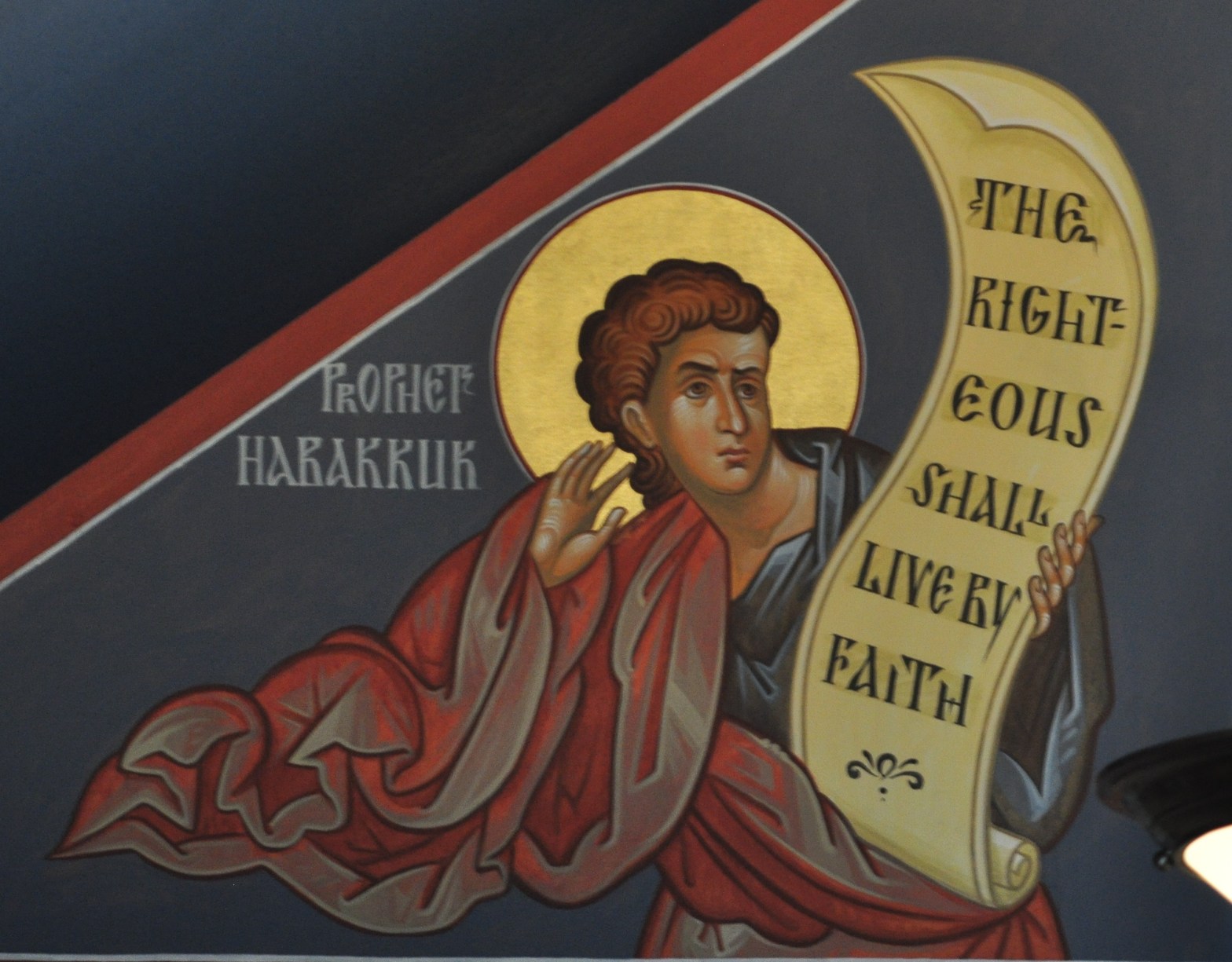
How long has it been since you’ve stumbled on the book of Habakkuk? I hope, if not recently, you’ll revisit it soon. Habakkuk is a rich (but short) book that is very unique among the prophetic books of the Old Testament.

Usually we would see a prophet speaking on behalf of God to the people. In Habakkuk we see a prophet speaking on behalf of the people to God. Habakkuk has a complaint. He wants to know why God is allowing injustice to be done among his people. He wants to know if God even hears his cries or if God cares at all. Habakkuk was a very bold prophet.

God’s response is jarring. Not only will God not do what Habakkuk wants on Habakkuk’s time, he is going to do the opposite. God is going to rise up very bad people to come and route Habakkuk’s people. That’s bad news.

Habakkuk complains once more but God responds by telling Habakkuk that justice will be done and God will eventually crush his enemies. Habakkuk then responds in chapter 3 with a prayer/song. All of a sudden, Habakkuk goes from complaint to praise in just a few short chapters.

What follows in chapter 3 is, in my opinion, one of the most awesome songs in Scripture. Reading it recently also can serve to remind us of some things that should mark our worship. While many things can be gleaned from Habakkuk 3, here are just a few reminders Habakkuk gives us about worship:

God is the Focus

This may evoke a “duh” response but this is something we need to be reminded often. We know God ought to be the focus of our worship but it is incredibly easy to take our focus off of God. In a consumeristic culture we might tend to focus more on whether we enjoy or like the worship experience. We might become preference-driven in our worship to the point where worship isn’t happening at all.

Habakkuk spends the entirety of the song talking about who God is and what He has done. Habakkuk’s posture is nothing short of awe in the God of glory. Habakkuk retells and recalls deeds done by this Divine-Warrior who is sovereign and mighty and he can’t help but praise Him.

Desire to See God’s Splendor

At the beginning of the book, Habakkuk desired God to come and wipe out his enemies. After his encounter with God, Habakkuk’s desire is for God’s splendor to be magnified (whilst wiping out his enemies).

What is our desire in worship? We come to an “event” on Sundays but our focus and desire may be in something else. We have encountered many difficult things in our week leading up to Sunday and we are dreading some things we may be facing in the coming week. In that time of worship with Christ’s body do we desire relief or God’s glory and splendor?

Habakkuk wanted God’s might to be known to all men, may that be the desire of our hearts when we worship Him alone.

It’s Biblical

Obviously it’s biblical because it’s in the Bible. What I mean is that Habakkuk recalls and recites deeds done by God that are told by Scripture. He begins in verse 2 by saying he has heard the report about God and He wishes for God to operate in the same manner He did when He rescued the Hebrews in the Exodus. He continues by recalling all kinds of mighty deeds learned from Scripture.

In the same way our worship must be Biblically driven and informed.

It Transforms

 It’s amazing the transformation that happens in Habakkuk’s posture from chapter 1 to chapter 3. Not only is there a shift between chapters, there’s a shift in Habakkuk’s tone during the prayer/song.

In verses 2-15 Habakkuk sang/prayed about God’s power made visible in the past. In verses 16-19 he sings a song of joy, even when the simplest sign of God’s favor (food on the table) seem to be absent. He is afraid but he finds his joy in God, His sovereignty, and His providence.

Worship should change us. If we are encountered by the same God Habakkuk speaks of, we will be transformed. We will leave different than we were when we came. If we aren’t transformed, we aren’t worshipping.

It is Congregational

As is evidenced by the first verse and last part of verse 19, this song was meant to be sung amongst God’s people. Worship music in Scripture is overwhelmingly congregational and this song is no exception.

When we sing together to God, we are displaying our unity, we are reminding each other of God’s glorious gospel of grace and His mighty deeds, and we edify one another.

It shows us it’s possible to worship when inconvenient

Holding out hope in this situation Habakkuk finds himself in could not have been easy. God personally gave him news he didn’t want to hear, yet this didn’t stop him from worshipping and praising God.

There will be times we don’t feel like singing or hearing a sermon or praying. Habakkuk shows us it is possible to worship in Spirit and in Truth when it isn’t convenient or comfortable because no matter our situation, God is still deserving of all praise and adoration.

Let’s dwell on the mighty deeds of our sovereign God and we will be transformed so that we can say with Habakkuk:

 “Though the fig tree should not blossom, nor fruit be on the vines, the produce of the olive fail and the fields yield no food, the flock be cut off from the fold and there be no herd in the stalls, yet I will rejoice in the Lord; I will take joy in the God of my salvation. God, the Lord, is my strength; he makes my feet like the deer’s; he makes me tread on my high places” (Habakkuk 3:17-19, ESV)