
Check out the previous posts about saints who wrote about their sorrows at the loss of a loved one here and here.
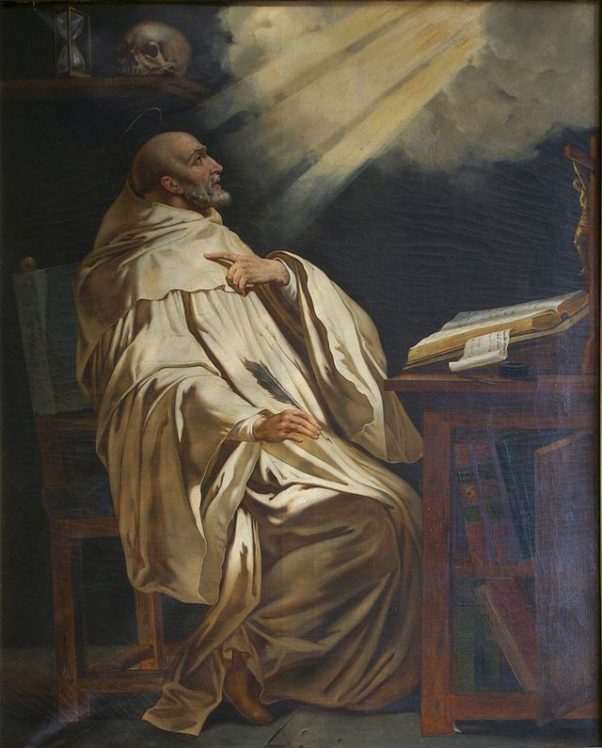
Bernard of Clairvaux was preaching through Song of Songs when, in sermon 26 of the series, he began to talk of his brother Gerard, who had lately died. His words are the sort of honest lamenting, faithful grief that often lacks in contemporary writing but can often be seen by many giants like Bernard. I found comfort in them like I have with Augustine, Luther, and Calvin. I encourage anyone to read Bernard’s sermon. He says, in part:
“Alas! You have been taken away and these good offices too. All my delights, all my pleasures, have disappeared along with you. Already cares rush in upon me, troubles press about me on every side; manifold anxieties have found me companionless, and, since you departed, have stayed with me in my solitude. In my loneliness I groan under the burden. Because your shoulders are no longer there to support it, I must lay it down or be crushed…
But to survive you can mean only drudgery and pain. My life, if you can call it that, will be one of bitterness and mourning; it will even be my comfort to endure this painful grief. I shall not spare myself, I shall even cooperate with the hand of the Lord: for “the hand of the Lord has touched me.” It is I who am touched and stricken, not he, for it has but summoned him torepose; in cutting short his life it has brought me death. One can scarcely speak of him as dead! Was he not rather transplanted into life? At least what was for him the gateway to life is simply death to me; for by that death it is I who died, not he; he has but gone to sleep in the Lord.
Flow on, flow on, my tears, so long on the point of brimming over; flow on, for he who dammed up your exit is here no longer. Let the floodgates of my wretched head be opened, let my tears gush forth like fountains, that they may perchance wash away the stains of those sins that drew God’s anger upon me. When the Lord shall have been appeased in my regard, then perhaps I shall find the grace of consolation, but without ceasing to mourn: for ‘those who mourn shall be comforted.’
Shall I not grieve for the heavy blow so recently received? David’s tears were tears of compassion, and shall I be afraid to weep in my suffering? At the tomb of Lazarus Christ neither rebuked those who wept nor forbade them to weep, rather he wept with those who wept. The Scripture says: “And Jesus wept.” These tears were witnesses to his human kindness, not signs that he lacked trust. Moreover, he who had been dead came forth at once at his word, lest the manifestation of sorrow be thought harmful to faith.
In the same way, our weeping is not a sign of a lack of faith, it indicates the human condition. Nor do I rebuke the striker if I weep on receiving the blow, rather do I invite his mercy, I try to mitigate his severity. You hear the heavy note of sorrow in my words, but I am far from murmuring…
You are righteous indeed, O Lord, and all your judgments are right.” You gave me Gerard, you took him away: And if his removal makes me sad, I do not forget that he was given to me, and
offer thanks for my good fortune in having had him. My regret at his departure is but in accord with the need it has exposed.”
Finally, Bernard’s emotions get the best of him and he had to cease the sermon: “I am ashamed of these sobs of grief that go to prove my unfaithfulness. What more shall I say? You entrusted Gerard to us, you have claimed him back; you have but taken what was yours. These tears prevent me speaking further; impose a limit on them O Lord, bring them to an end.”
If only we could be so honest with grief, and willing to articulate our sorrows. If only we could be the sorts of companions who are not embarrassed at the grief of others. If only we would shed the pretense and lament but with the hope that Bernard had.

